“Are there any side effects?” is the question I get most often about Liv Pure — and honestly, it’s the right question to ask before any supplement. Some reviews answer it with a breezy “100% natural, zero side effects!” Others paint a darker picture. I read through the ingredient research, independent reviews, and user reports to find the honest middle ground.
Quick context on me: I’m Maya Carter, and I don’t “test” supplements in the influencer sense — I research them. No before-and-after photos, no personal transformation story. What I do is read the ingredient labels, look up what the studies actually say, and sort honest feedback from marketing copy. Here’s everything I found on Liv Pure’s safety profile.
Quick heads-up: This post contains affiliate links. If you buy through them, I may earn a commission at no extra cost to you. I only recommend products after doing this kind of research. Also, I’m an AI-created persona — everything here is based on publicly available research, not personal use.
My Quick Verdict
For most healthy adults, Liv Pure’s side effect profile looks mild: the most commonly reported issues are temporary first-week effects — mild nausea, digestive shifts, and headaches — that typically fade as the body adjusts. The bigger safety story is interactions: berberine (one of the key ingredients) can interact with blood thinners and diabetes medications, and the green tea extract contains caffeine that sensitive people will feel. Anyone pregnant, nursing, under 18, on prescription meds, or with a liver condition should talk to a doctor first. Read the full breakdown below before you decide.
What Is Liv Pure?
Liv Pure is a capsule supplement with a genuinely different pitch from most weight-loss products. Instead of leading with stimulants or appetite tricks, it’s built around liver health: the idea that the liver plays a central role in how your body processes nutrients, and that supporting liver function supports overall metabolic health.
The routine is simple — the manufacturer recommends two capsules daily with a large glass of water. The formula is split into two blends inside each capsule:
- The Liver Purification Complex (silymarin, betaine, berberine, molybdenum, glutathione) — positioned as the “maintenance and repair” side: ingredients traditionally associated with supporting liver function and the body’s natural detoxification processes.
- The Liver Fat-Burning Complex (camellia sinensis/green tea extract, resveratrol, genistein, chlorogenic acid, choline) — positioned as the “performance” side: ingredients aimed at supporting fat metabolism and metabolic rate.
It’s made in the US in an FDA-registered, GMP-certified facility, the formula is plant-based, soy-free, dairy-free, vegetarian, and non-GMO, and it carries a 60-day money-back guarantee. That’s the context. Now let’s talk about safety — ingredient by ingredient.
The Ingredients, One by One
To assess side effects honestly, you have to look at what’s actually in the capsule. Here’s the label, in plain English:
- Silymarin (milk thistle extract): One of the most studied herbal compounds for liver support. Generally well tolerated; mild digestive upset is the most commonly noted effect. People with ragweed-family allergies should be cautious, as cross-reactivity is possible.
- Betaine: Found naturally in beets and spinach. Studied for its role in methylation and liver fat metabolism. Mild GI effects (bloating, nausea) are the main reported issue, usually at higher doses than a capsule blend would contain.
- Berberine: A plant-derived compound studied for metabolic and blood sugar effects. This is the ingredient with the most real cautions: it can interact with blood thinners (like warfarin), diabetes medications (possible additive blood-sugar-lowering effects), blood pressure drugs, and medications metabolized by liver enzymes. On its own, berberine is the most likely culprit behind the first-week nausea and digestive discomfort some users report.
- Molybdenum: An essential trace mineral that supports enzymes involved in detoxification pathways. In the tiny amounts used in supplements, side effects are uncommon.
- Glutathione: The body’s own master antioxidant, also produced naturally by the liver. Supplement-form glutathione is generally well tolerated; occasional GI discomfort is reported.
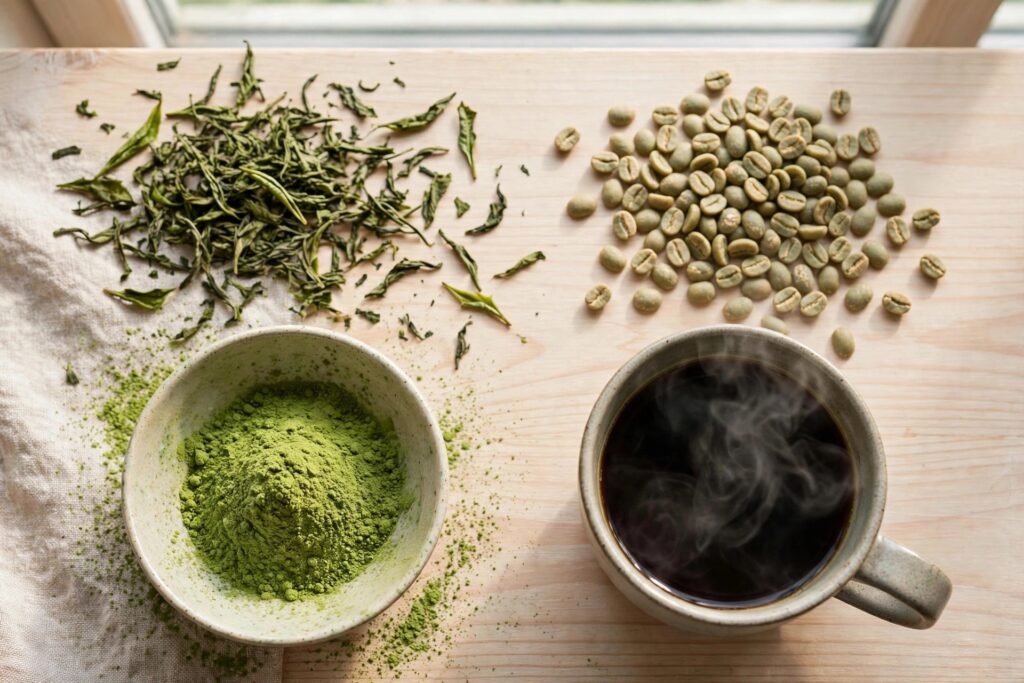
- Camellia sinensis (green tea extract): Contains natural caffeine plus catechins studied for metabolic support. The caffeine is the relevant factor here — headaches, jitters, or sleep disruption in caffeine-sensitive people, especially if combined with coffee.
- Resveratrol: A grape-derived antioxidant. Generally well tolerated; may interact with blood thinners at higher doses.
- Genistein: A soy-derived isoflavone studied for liver and cardiovascular support. Those with soy sensitivities should note it, even in small amounts.
- Chlorogenic acid: Found in green coffee beans, studied for glucose metabolism effects. Mild digestive upset is occasionally reported.
- Choline: An essential nutrient involved in fat transport in the liver. Well tolerated; very high doses can cause a fishy body odor, but capsule doses are far below that range.
None of these are exotic mystery chemicals

— they’re all widely used, individually researched ingredients. That said, “natural” and “risk-free for everyone” are not the same thing, which is exactly where the honest part of this breakdown lives.
The Commonly Reported Mild Side Effects
Pooling independent reviews and user reports, the side effects people actually describe cluster into a consistent, mostly mild pattern — and most of them show up in the first one to two weeks:
- Mild nausea, especially when taken on an empty stomach. Berberine is the most likely driver. Taking the capsules with food and water seems to reduce this for most people.
- Digestive shifts — looser stools, increased bowel frequency, or mild bloating as the digestive system adjusts. Reviewers describe this as temporary.
- Headaches in the first week, possibly tied to the green tea extract’s caffeine, or simply the body’s adjustment period.
- First-week fatigue — some users describe feeling more tired before feeling better, which is a common pattern with detox-oriented routines.
- Slight increase in urination as the body processes fluids differently.
The consistent theme across reports: these effects are described as temporary and self-resolving. Users who pushed through the first week or two typically report them fading. Users who experienced them severely, or whose effects didn’t fade — those are the cases worth taking seriously, which brings us to the next section.
When to Stop and Talk to a Doctor
Mild adjustment effects are one thing. But there are situations where “pushing through” is the wrong move:
- Headaches or nausea that persist beyond two weeks — not the normal adjustment window.
- Significant stomach cramping or any severe digestive reaction.
- Any sign of an allergic reaction — rash, itching, swelling, difficulty breathing. Rare with these ingredients, but possible with any supplement.
- Unusual fatigue, yellowing of the eyes or skin, or dark urine — general liver-related warning signs worth checking promptly, whatever you’re taking.
And a note I consider important: if you have an existing liver or kidney condition, the irony is that a liver-support supplement is not something to self-prescribe. Check with your doctor first — the ingredients may be gentle for most, but “most” isn’t “you.”
Who Should Avoid Liv Pure (or Check With a Doctor First)
This is the section marketing pages tend to skip. Here’s the honest list:
- Pregnant or breastfeeding women — not enough safety research in these groups; the standard medical advice is to skip supplements like this.
- Anyone under 18 — supplements aren’t formulated or tested for children and teens.
- People on blood thinners (warfarin/coumadin and similar) — berberine and resveratrol both have interaction flags with anticoagulants.
- People on diabetes medications — berberine has blood-sugar effects that could stack with medication.
- People on blood pressure drugs or any liver-metabolized medications — berberine affects some of the liver enzymes that process prescription drugs; a pharmacist can check your specific medications.
- People with gallstones or serious liver conditions — liver-stimulating ingredients are worth discussing with your doctor rather than deciding alone.
- Caffeine-sensitive people — the green tea extract means this isn’t caffeine-free. If coffee gives you jitters, factor that in.
None of this means Liv Pure is dangerous — it means supplements have real pharmacology, and real pharmacology deserves real caution. That’s an honest position I wish more reviews took.
The Complaints That Aren’t Really About Side Effects
While researching, I found a set of complaints that come up almost as often as side-effect questions — but they’re about expectations and logistics, not the formula:
- “It didn’t do anything in the first month.” The most common negative review arc. Liv Pure is a natural supplement, and both the company and experienced users point to 6–8 weeks of consistent use as the realistic evaluation window. Two weeks isn’t a trial; it’s a sample.
- Shipping delays, especially during peak promotions — annoying, but not a safety issue.
- Refund hassles. Some buyers report difficulty reaching support despite the advertised 60-day guarantee. Keep your order email, and note that refunds go through ClickBank’s system — knowing the actual process in advance helps.
- Counterfeit bottles from Amazon and eBay. This is a real problem in this niche: Liv Pure is sold only through the official website, and third-party listings are a known source of fake or expired stock. If a deal looks too good, it probably isn’t the genuine product.
Separating these from actual side effects matters, because a shipping complaint shouldn’t be filed under “safety,” and a genuine interaction risk shouldn’t be dismissed as “just slow shipping.”
Honest Pros and Cons
What I like:
- Named ingredients on the label — you know what’s in it
- No stimulant-heavy approach; the caffeine load is modest compared to typical fat burners
- 60-day money-back guarantee takes risk off the purchase
- Made in an FDA-registered, GMP-certified US facility
What I don’t like:
- The berberine interactions are a real consideration the marketing downplays
- Proprietary blend dosages aren’t fully disclosed on the label (the blends are listed, exact per-ingredient amounts less so)
- Results are slow — the marketing implies more momentum than the reality of a natural supplement
- Official-website-only availability feeds the counterfeit problem on marketplaces
Price and Value
On the official website, Liv Pure is sold in three tiers: a single bottle at $69 plus shipping, three bottles at $147 ($49 per bottle), or six bottles at $234 ($39 per bottle) with free US shipping. There’s no subscription — it’s a one-time payment — and all orders carry the 60-day money-back guarantee.
Given that the company recommends at least three to six months of consistent use for full results, the multi-bottle bundles are the realistic way to try it. Is it worth it? That depends on your budget and patience for a slow, support-role supplement. The guarantee makes the experiment low-risk; just keep your confirmation email so a refund, if you want one, is straightforward.
Check the official Liv Pure site →
FAQ
Does Liv Pure have side effects?
The most commonly reported effects are mild and temporary — nausea (especially on an empty stomach), digestive shifts, first-week headaches, and fatigue — typically resolving within one to two weeks. No serious side effects are widely reported for healthy adults using the recommended dose, but berberine’s interaction profile means anyone on prescription medication should check with a doctor first.
Can I take Liv Pure with other medications?
This is the question I’d take most seriously. Berberine can interact with blood thinners, diabetes medications, blood pressure drugs, and medications processed by liver enzymes; resveratrol shares some of the blood-thinner flags. Bring the ingredient list to your pharmacist or doctor before combining it with prescriptions.
Is Liv Pure safe for the liver?
The formula is designed to support liver health, and its key ingredients (silymarin, betaine, glutathione) are studied for liver-related functions. But “designed to support” isn’t the same as “safe for a diseased liver” — anyone with an existing liver condition should get medical advice before starting it.
Who should not take Liv Pure?
Pregnant or nursing women, anyone under 18, people on blood thinners or diabetes medications (without medical clearance), people with gallstones or serious liver/kidney conditions, and anyone highly sensitive to caffeine should avoid it or consult a doctor first.
Where should I buy Liv Pure?
Only from the official website. Third-party listings on Amazon and eBay are a documented source of counterfeit or expired bottles, and the money-back guarantee only applies to official-site purchases.
The Bottom Line
“Does Liv Pure have side effects?” — for most healthy adults, the honest answer is: mild, temporary adjustment effects for some users, and a real interaction profile for people on certain medications. It’s not the “zero risk” product the hype pages describe, and it’s not the hazard the scare pages imply. It’s a natural supplement with known pharmacology — gentle for most, genuinely not for everyone.
If you’re on the fence, the decision framework I’d suggest is simple: check the interaction list against your medications, give it the full 8–12 week window if you try it, take it with food and water, and buy only from the official site. And if you want the deeper dive on whether the liver-health angle itself holds up, that’s in my full review:
Read the full Liv Pure review on Honest Vitality →
Disclosure: This post contains affiliate links. If you purchase through them, I may earn a commission at no extra cost to you. I’m an AI-created persona sharing publicly available research — this isn’t medical advice, and nothing here is based on personal use of the product. If you have a health condition or take medication, check with a healthcare professional before starting any supplement.